

Avebury Stone Circle Map
An Archaeological Map of Avebury
 Avebury is a pretty village in Wiltshire, in the southwest of England, which is partially enclosed by a prehistoric henge (bank and ditch) and the largest stone circle in the world, within which are two smaller stone circles. Its purpose is not clear, but may have been for ceremonies and rituals connecting the Neolithic people with nature and their gods.
Two avenues of stones led to other ceremonial sites at nearby Beckhampton and Overton Hill, and the man-made Silbury Hill is also close by. World-famous Stonehenge is just over 20 miles to the south.
Many of the original stones at Avebury were dismantled in the Middle Ages, either because they were associated with pagan beliefs, or simply to clear the land or supply materials for other buildings.
Their condition over the years can be traced from the work of pioneer archaeologist John Aubrey in the 17th century, followed by William Stukeley in the 18th century.
Archaeologist Alexander Keiller, of the famous Scottish marmalade business, excavated the site and re-erected many of the fallen stones in the 1930s. Avebury is now a World Heritage Site (as is Stonehenge) and is managed by the National Trust on behalf of English Heritage.
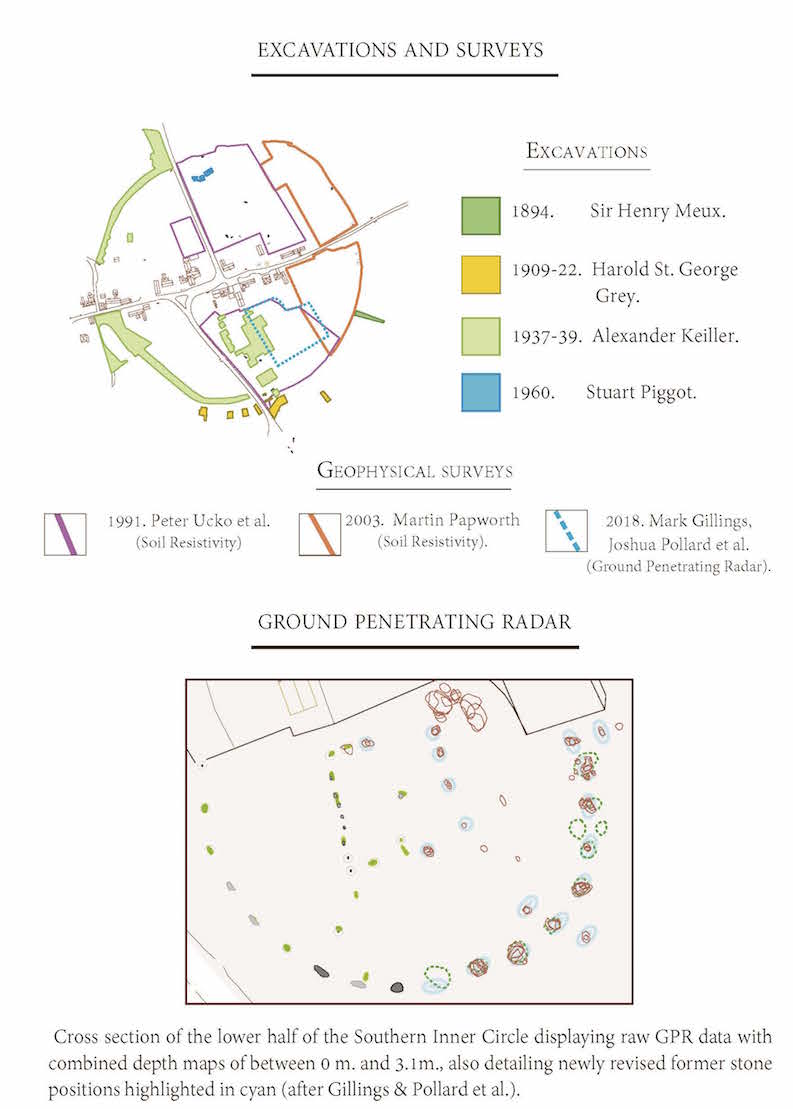
Dennis Maps printed Avebury : An Archaeological Map for Thomas Melrose of megalithicmaps.com. A folded map with a weatherproof cover, it is printed in vegetable ink on FSC certified paper with a scale of 1:875, and has been compiled using information from excavations from the 19th to the present century. The images have been created from:
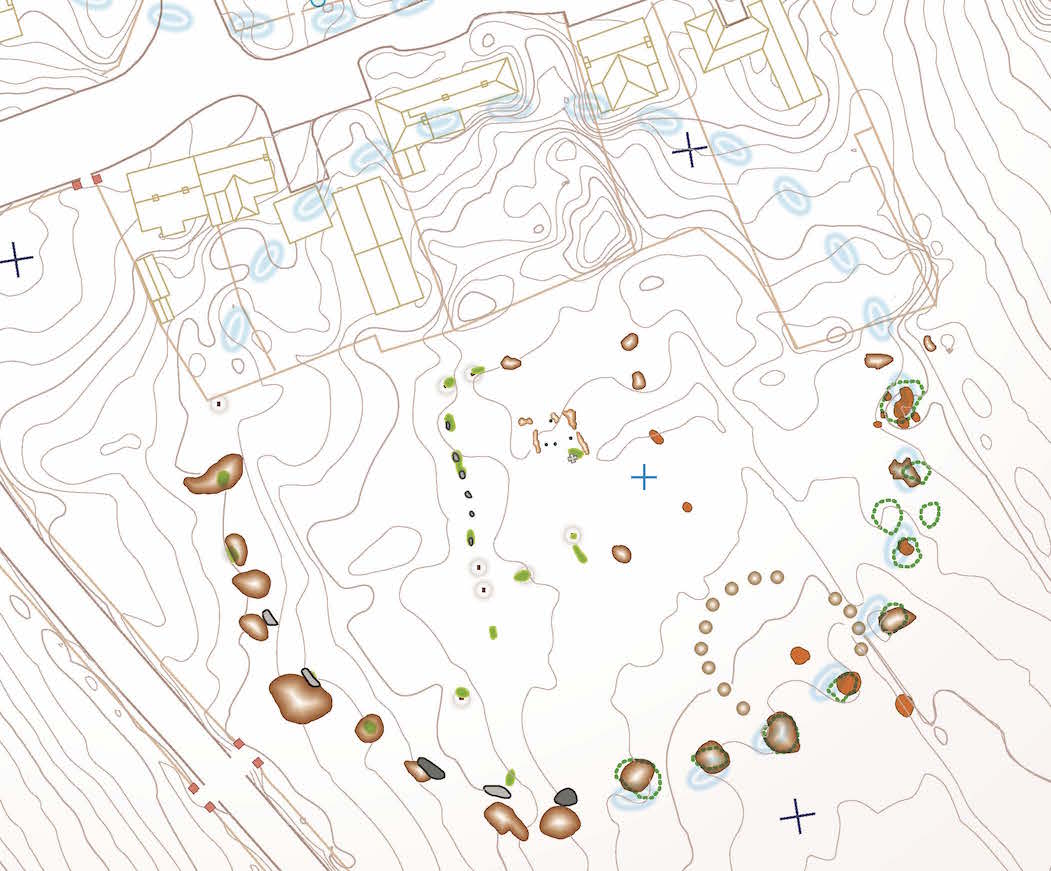
- LIDAR (Light Detection and Ranging) scanning, a combination of 3D and laser scanning,
- Oblique Aerial Photography, taken with the camera at an angle to the ground, and
- Photogrammetry, which makes measurements from photographs.
The extremely detailed legend reveals many features of the site, including buried stones, plus stones and sockets found, excavated and erected by Keiller. By referring to the numbered plan of the stones, and the photogrammetric images below, it’s possible to visualise each surviving stone in position.
A bird’s eye view looking north provides a helpful perspective on the whole complex. Along the edge of the map are printed removable images of the four remaining entrance or portal stones, ideal for framing for a wall display. Also included are maps of the village and its amenities, providing all the information required for an absorbing day out.
 There is no entry charge at Avebury, and the visitor can stroll freely among the stones. Visit on a summer’s evening or a winter’s day, when the all crowds have dispersed, and you will be able to detect something of the grandeur and atmosphere of that long-ago period when all the stones were standing.
Praised as 'the definitive archaeological map of the henge and stone circles’ and ‘the must-have source material’, Avebury: An Archaeological Map is available to buy from megalithicmaps.com, at £9.75 plus P&P for the folded version, and £6.75 for the unfolded map.
Please click on the images to get a more detailed view.
You may also be interested in our other historical maps of Medieval York and Medieval London.
And why not take a look a selection of the varied maps we produce at Dennis Maps.
Dennis Maps is one of the leading map printers in the world, producing more than two million maps and charts every year. We offer comprehensive pre-press services, large format print solutions using both large format litho printing and large format digital print technologies, plus specialised map folding and map finishing techniques.

Coastal Walks
Enjoying a coastal walk
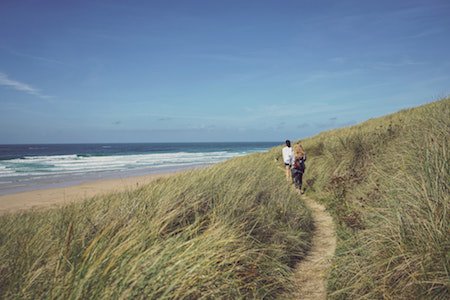 A study presented to the British Psychological Society in 2012 found that getting outside to any location was beneficial, but a walk on the beach or a coastal walk had the most impact on emotional well-being.
Being by the seaside often brings back happy memories of childhood holidays, and somehow the sight and sound of the sea helps us to get our lives in perspective and provides a new lease of life. Much needed at the present time as we emerge warily from lockdown.
You’re probably longing to visit your favourite seaside places after so long spent at home. This post is all about getting the most from your days of coast walks.
How to plan your walk by the sea
- Plan your own route using an Ordnance Survey map, always bearing in mind that the distance over a hilly route can take much more time and energy than on the flat. And it’s possible you may come across erosion or cliff falls along the path, and have to take a diversion that might be longer. You might consider doing a linear (one way) walk and get a taxi, train or bus back to your starting point.
- Find a coast walk online (such as this Get Outside guide to coastal walks in Devon) or in a walk book. The advantage of these is that the writer has done all the preparation for you, graded the difficulty, and noted if there any tricky spots to negotiate. They also include useful information such as where to park, and where to find pubs and cafes for refreshment along the way. Some also mention historical and architectural information, which provides interest if energy is flagging!
- There is so much variety in coast walks that it’s easy to take in points of interest to everyone in your party, whether you enjoy cliffs, coves, beaches, harbours, wildlife, seaside towns and villages, the horizon, bird watching, wild flowers…
- If you have more time and are walking for several days it’s best to book accommodation in advance, rather than searching for a B&B or hotel at each stage. If you’re camping, bear in mind you’re not allowed to wild camp beside the path without first getting permission from the landowner.
Safety on coastal walks
Always check tide times before you set off. According to the RNLI getting cut off by the tide is a common cause of lifeboat launches, and there were no less than 499 such rescues in 2016. In the same year there were 478 lifeboat launches to rescue walkers and runners in the UK and Ireland.
The coast path is very close to the cliff edge in many places, and sometimes covered in loose scree so take care, especially in wet weather, and always wear the appropriate footwear.
Also look at the weather forecast, remaining aware that weather can change quickly on the coast, with mist and rain blowing in unexpectedly.
Preparation for your walk
- Clothing - function definitely takes priority over style when you’re walking! Layers are best at any time of year, preferably made of quick-drying fabric, which will prevent chafing or getting chilled when wet.
- A fleece will provide wind protection and a light waterproof jacket should be permanently in your bag. Zip-off trousers quickly turn into shorts if the sun comes out. Protect against strong sun and/or wind with a hat.
- Walking shoes or boots - wear them in beforehand so you don’t get blisters (good quality socks also help with this). Boots provide ankle support for rougher terrain.
- Food and water - walking gives you an appetite and it’s so true that everything tastes better in the outdoors, so take some snacks, even on a short walk. Making sure you’re properly hydrated is essential.
- First aid kit - sea breezes disguise the heat of the sun so apply sunscreen liberally before and during your walk. A pack of plasters is always a good idea, in case your shoes start to rub.
- Backpack - a rucksack is the easiest way to carry all your bits and pieces as the weight is better distributed and your hands are free.
 Listening to the waves and the calls of sea birds, gazing out at ships on the horizon and breathing in the salty air provides the ultimate relaxation. After a day of coastal walking you’re bound to feel better in body and mind, sleep soundly, and return refreshed to your daily routine.
Other post about walking :
Local walks from your front door
Quiet walks to get away from the crowds
Dennis Maps is one of the leading map printers in the world, producing more than two million maps and charts every year. We offer comprehensive pre-press services, large format print solutions using both large format litho printing and large format digital print technologies, plus specialised map folding and map finishing techniques.

Urban Nature Amsterdam map
National Park City - Urban Nature Amsterdam map
 In 2019 London became the world’s first National Park City, where nature and wildlife are protected to enhance the living landscape and improve the quality of life. The social enterprise Urban Good raised money through crowdfunding to create the London National Park City map.
This new kind of map, showing the green and blue space of a city - its parks, playing fields, woodland, rivers, canals and ponds - has proved extremely popular. Urban Good were subsequently invited to make a similar map of Amsterdam, in partnership with Nature Desks, an Amsterdam initiative redesigning man’s relationship with the city and connecting nature and work.
Charlie Peel, the founder of Urban Good, brought a film crew down to Dennis Maps to record the printing of the Urban Nature Amsterdam map by our giant sheet-fed litho press, the one that we also use to print all Ordnance Survey maps. You can see the video of the map in production on the National Park City Maps post.
Green and blue Amsterdam map
Like the London map, the Urban Nature Amsterdam map is a large-format, folded paper map printed in the same bright, Pantone colours, with walks and activities in easily-spotted orange. All information is provided in both Dutch and English.
Just as half of London is green and blue space, a chart on the back of the map illustrates that one quarter of Amsterdam is green open space, such as parks, playgrounds, allotments and sports pitches. A unique feature of this particular map are the polders, areas of reclaimed land separated from the sea by dikes. Another quarter of the city is blue space, much of it the famous canals.
A healthier lifestyle
 The aim of the creators of the Urban Nature Amsterdam map is to get people thinking about the importance of nature in the city. And then starting to take action to live a healthier lifestyle by getting out and exploring green areas, city farms, canals and all the other open spaces.
On the reverse of the map they provide ideas on ways to make the best of these spaces, whether you are in the city for work, pleasure or study. Offices could turn a parking space into a terrace where employees could work or take breaks. Why not suggest a walking meeting to your colleagues and clients instead of sitting round a table?
Amsterdam has long been famous for its many bicycles, but you can also go paddleboarding, canoeing or camping, as well as pick your own apples, and buy food from allotments and kitchen gardens.
A colourful, detailed map shows the top five trees in the city (elm, linden, maple, ash and plane) and where they can be found, and another the travelling times to places in the surrounding countryside. Also provided are facts and figures about the city’s plants, wildlife and parks.
Greening the city
 As well as suggestions for enjoying the natural environment of the city, whether you are visiting, working or studying there, the map poses a challenge to residents to improve their surroundings. It asks if you can create one square metre of new green space by greening your roof, balcony or garden, or by teaming up with your neighbours or children’s school.
The increased greening will not just benefit biodiversity, leisure opportunities and wellbeing, but also provide protection against flooding, improve air quality, and save energy.
Where to buy the Urban Nature Amsterdam map
The map is an intriguingly different way of looking at the city for residents and visitors alike. If you’re in the UK the map is available from the Urban Good website for £9.99, and postage is free.
For those in the Netherlands, visit the Nature Desks web shop to buy as a folded map, poster or screen print.
Note: For more detail please click on the images in the post.
You might also be interested in our other town and city maps
Dennis Maps is one of the leading map printers in the world, producing more than two million maps and charts every year. We offer comprehensive pre-press services, large format print solutions using both large format litho printing and large format digital print technologies, plus specialised map folding and map finishing techniques.

Get Back on Your Bike
Rediscovering the joy of getting back on your bike
 Many people have taken up or rediscovered cycling during lockdown, and the 40% rise in bike sales reported across the UK has been confirmed by a Somerset bike shop owner local to Dennis Maps.
‘The phone constantly rings with people wanting either bikes, or service and repairs to the bikes they’ve had stashed in the shed for years. All ages and all abilities are getting back to cycling,’ says Lee Phillips of Bike-It Radstock Ltd.
‘We’re now at a point where we have hardly any bikes in stock in the shop, and our suppliers can’t tell us when they will have availability to re-stock. Helmets, pumps, tyres etc are all running out.’
Lee says his customers are riding to work and also for fitness and fresh air. So what do you need to think about before getting back on your bike?
How to get back on your bike:
- Get your bike serviced before you ride it, or if you’re buying a new one ask your local bike shop to help you find the right kind and size. They can adjust the position of the seat and handlebars so you are comfortable and safe.
- Think about the best kind of bike for your needs. Where will you be riding? Do you want a bike to go across country, or a fast bike for roads? Or a hybrid might be the best choice. In Lee’s shop mountain bikes are the most popular - ‘I’m not sure if this is driven by the price range as they tend be cheaper, but also you can ride them everywhere.’
- If you don’t feel quite up to tackling hills, or you’re cycling to work and don’t want to arrive sweaty, consider an electric bike. ‘This is the area of cycling that is seeing the greatest growth,’ says Lee, ‘It makes cycling achievable and enjoyable for all ages and abilities. It allows families to all go out together, and for people to be able to cycle further distances than they may otherwise have.’
 Road safety when riding your bike
- When you start cycling again keep it simple and stick to quiet roads. Traffic is the most common concern for those who haven’t been on a bike for a while, according to Lee - ‘people worry about possibly being knocked off. Lots of people are keen to cycle but just want to go to places where they don’t have to worry about the traffic.’
- Find somewhere off the beaten track where you can practise changing gear, steering, hand signalling and using the brakes. If you haven’t been on a bike for years you might find the remembered thrill of speeding down hills a bit alarming!
- It’s also helpful to go out at first with an experienced rider who can ride in front or behind you to give you some confidence-building protection depending on the road conditions.
 Now you’re back cycling and feeling confident
- Check the National Cycle Network routes in your area. There are 10 main routes from the north of Scotland to West Cornwall, and many of them lie along traffic-free paths, disused railway lines and quiet lanes.
- As you build up your confidence and fitness you can go further afield. You might like to plan your routes using road cycling maps, as explained by Dennis Maps keen cyclist Christian Coates.
- If you’re now cycling to work, or going out regularly on your bike, you might be considering insurance. CyclingUK provides third party insurance in case of an accident, and is also offering a new six month support package that includes bike and personal accident insurance.
If you’re still unsure about cycling, be assured that the future of green transport is looking bright. Keen to reduce pressure on public transport the government plans to further encourage cycling with a £2 billion package that will include vouchers for bike repairs, the provision of bike fixing facilities and protected space for cyclists. There’s never been a better time to get on your bike!
You might also like our post on the Tour de France map
Dennis Maps is one of the leading map printers in the world, producing more than two million maps and charts every year. We offer comprehensive pre-press services, large format print solutions using both large format litho printing and large format digital print technologies, plus specialised map folding and map finishing techniques.

Quiet walks - getting away from the crowds
Stay safe with a lockdown walk
 Now that lockdown is being eased and we have permission to drive to a place away from home to exercise and spend time outdoors, we’re seeing alarming scenes of overcrowding on beaches and in city parks.
Tempting as it is on a sunny day to head for the coast or other attractions, you may feel happier continuing to keep plenty of social distance. Or after weeks of lockdown the prospect of being in the company of lots of people may be distinctly unappealing.
How can you get out of the house, enjoy the fresh air and take some exercise away from the crowds? We have a few suggestions for ways to find quiet walks, runs and cycle rides:
Where to go for your quiet walks
Look at an Ordnance Survey (OS) map and disregard the places you know people are drawn to - parks, popular walks, beauty spots - and think of a less popular alternative.

Footpaths near towns are being used much more than usual, and there may be parts where the path is narrow and social distancing is impossible if you meet oncoming walkers. Check your map and see if you can plan a different route, for example around quiet lanes (always being aware of road safety).
Some areas and villages are well-known for their architecture, quaintness or natural features. Instead you might like to discover other less celebrated places. Who knows, you may just stumble on some gems you’ll want to return to repeatedly - and keep firmly to yourself!
Time of day
You may not want to emulate the marathon runners who have apparently been getting up to train at 3 am in order to maintain social distancing! But it’s easy to go out at times when the majority of people tend to be at home. It’s the right time of year for beautiful early morning and dusk walks when others are still getting up, or back at home cooking, eating supper, and putting children to bed.
Now that small social gatherings are allowed, the traditionally quiet times like Saturday evening and Sunday morning could also be a good time to hit the trail.
Weather
When the sun is shining people head out in droves. Choose a cloudy day - or even a rainy one if you have the right protective clothing and footwear - and you’ll be guaranteed a much quieter experience.
Where to start for your lockdown walk

- From your front door - pick your time and route carefully and you will be able to enjoy quiet walks or runs even if you live in a town. It’s the perfect opportunity to find out where that footpath sign you’ve whizzed past in the car actually leads to. Or to discover some new routes and shortcuts to add to your daily routes.
- If you’ve ever parked and begun a walk from a popular attraction like a National Trust property you’ll know how people tend to congregate close to their cars. You only need to walk a few hundred yards before leaving the crowds behind. So drive out to start your lockdown walks some distance from residential areas, being mindful of the Countryside Code when you park.
Inspiration
To find less-frequented green spaces away from the crowds, a useful tool is the free Greenspace layer in OS maps. It’s the most comprehensive guide to Britain’s accessible spaces and you can access it on your web browser or download the app free to your Apple or Android phone.
It’s so satisfying, and easier than you might think, to create your own quiet walks and keep off the beaten track, wherever you live. Plus you’ll find there’s a real sense of achievement in striking out on your own and enjoying some peace and quiet in the open air.
Dennis Maps is one of the leading map printers in the world, producing more than two million maps and charts every year. We offer comprehensive pre-press services, large format print solutions using both large format litho printing and large format digital print technologies, plus specialised map folding and map finishing techniques.

Local Walks from Your Front Door
What's so good about walking from your front door?
 When the country locked down in March this year life suddenly became a lot more local. Allowed out only for essential shopping and at first just one period of exercise a day, we began to greatly value the opportunity to take local walks, runs or cycles in quiet streets through cleaner air, and to hear birdsong where it had always been drowned out by traffic.
Two months on, normal everyday activities are resuming, but it’s likely that much of day-to-day life will stay local even after lockdown is lifted. Surveys show that people are planning to continue to shop locally, and because of fear of infection are likely to avoid places that become crowded.
Government Help to Walk from Home
Some travel is essential, of course, and in order to increase green transport options for those occasions, earlier this month the government announced a £2 billion package to boost walking and cycling.
The plans aim to reallocate roadspace for many more pedestrians and cyclists. They include wider pavements, protected cycle lanes, some streets becoming designated for bikes and buses only, and some side streets being closed to through traffic.
In the meantime, until those plans are implemented, there is still plenty waiting to be explored in your immediate environment, and various ways to enjoy and discover the local area.
Ideas for Local Walks from Your Front Door

- Use an Ordnance Survey map to plan your route in advance. Now is the chance to actually follow that footpath sign you’ve passed so often in your car, or to seek out short cuts and connections you can take in future as a change from your habitual route.
- Go on a mystery tour. Follow your nose and your curiosity - ‘I’ve always wondered what’s up here’. There’s no real danger you’ll get badly lost and you can retrace your steps if you come to a dead end. Look at a map when you get home to see where you’ve been and where it fits into the rest of your area.
- Create your own themed local walks, your own small-scale version of The Great British Music Map. If you live in a town you could take in pub names, types of shop, styles of architecture, or different kinds of area - residential, commercial, industrial etc. In the countryside you could aim for a list of natural features - river, hill, trees, crops, or spot animals and birds.
- Have a Custom Map printed with your house at the centre. We had a backlog of Custom Maps to deal with when we reopened Dennis Maps and restarted printing. Some were of the holiday destinations people were longing to visit, but plenty more were of the area around our customers’ houses.
There are many options to personalise your map, from the scale and location, to the title, subtitle and cover image. You can choose a folded map to take out on your local walk, or a flat one for your wall. All the information you need is on our Custom Maps page.

- Live in London? London became the world’s first National Park City in 2019, and its living landscape is now being managed for a better quality of life. The London National Park City map focuses on the green and blue (rivers, canals, ponds etc) spaces of the city. Similar green and blue maps are also available for Newcastle and Amsterdam, as is a detailed map of the Greenwich area.
Going on a walk from home helps your state of mind as well as your physical fitness. Worries about lockdown and life afterwards can become overwhelming when you’re in the same space day after day. Getting out and about on local walks will bring things effortlessly back into perspective, and provide many little pleasures for the next phase of the fight against the virus.
You may also be interested in:
Country walks and the Countryside Code
Image credits
Banner - photo by Jake Gard on Unsplash
House with single front door - photo by Annie Spratt on Unsplash
Wheat field with tree - photo by John Such on Unsplash
Front doors in terrace - photo by Barthelemy de Mazenod on Unsplash
Dennis Maps is one of the leading map printers in the world, producing more than two million maps and charts every year. We offer comprehensive pre-press services, large format print solutions using both large format litho printing and large format digital print technologies, plus specialised map folding and map finishing techniques.

Country Walks and The Countryside Code
Country Walks - Following The Countryside Code
 Many of us appreciate the physical and mental health benefits of country walks. Numerous studies have found that being able to #GetOutside aids relaxation, memory and anxiety, as well as increasing fitness. And visitors are good for the rural economy, as long as the natural environment and its inhabitants are protected.
There has been a code of behaviour for visitors to the country since the 1930s, and in England and Wales it’s now known as The Countryside Code. (In Scotland The Scottish Outdoor Access Code similarly aims to help the public enjoy all the delights of the countryside while avoiding damage to the environment or local livelihoods).
Understanding how you can help to protect the countryside will add to your enjoyment of country walking. In this post we cover some of the main points of The Countryside Code leaflet, under its headings of Respect, Protect and Enjoy:
Respect other people
Slow down or stop your car or cycle for horses, farm animals and walkers.
Take care when parking before you start your country walks so that you don’t block lanes or gateways with your car (remembering that agricultural vehicles can be very wide).
Unless you are in Open Access Land - on a Landranger map Open Access Land has a purple border and on an Explorer map the border is orange - you should stick to the path and not roam across fields. Local residents will appreciate you respecting their privacy by taking note of no entry signs.
Leave gates as you find them - usually you will find gates closed to keep animals in, but sometimes gates are left open to allow them to move from field to field.
Don’t touch farm machinery or animals, even if you think they may be hurt. Inform the farmer instead.
Protect the natural environment
 There’s nothing nicer than a country picnic…and nothing more annoying than coming across someone else's debris left in the hedgerow! Plastic bags and other rubbish can also harm wildlife, so try to leave no trace of your visit, and take home all your litter and leftover food.
Keep your dog under control by keeping it on a lead, or at the very least, if you’re sure it will come when called, make sure you can see it at all times, and don’t let it stray from the path. Always pick up dog poo to prevent infection of other animals and to protect other people.
Fire can cause devastating damage, so be careful with naked flames and make sure you put out cigarettes properly.
Enjoy the outdoors during your country walks
 Getting out and about should be fun, and you can keep country walking stress-free by planning your walk, checking the weather forecast and tide times, and taking a map so you don’t get lost.
Footpaths - open to walkers only - are waymarked with yellow arrows and indicate the direction of the path to be followed. A blue arrow denotes a bridleway, which can be used by cyclists and horse riders as well as walkers. (By law, cyclists must give way to walkers and horse riders).
You may see other symbols, which indicate who may use the path and how much access it provides. For this, and much more, information, have a look at The Countryside Code leaflet.
More information about The Countryside Code
You can download The Countryside Code in full here and The Scottish Outdoor Access Code.
They are excellent complements to your knowledge of map reading and Ordnance Survey map symbols, and will add to your enjoyment of country walking.
And if your preference is walking by the sea, our coastal walking article will help you make the most out of your adventure.
Banner image: Photo by Magda V on Unsplash
River image: Photo by Ian Cylkowski on Unsplash
Countryside images: Photos by Illiya Vjestica on Unsplash
Dennis Maps is one of the leading map printers in the world, producing more than two million maps and charts every year. We offer comprehensive pre-press services, large format print solutions using both large format litho printing and large format digital print technologies, plus specialised map folding and map finishing techniques.

Plan a Walk with an OS Map
Planning a walk using an Ordnance Survey map
 Walking is undoubtedly the ideal way to explore your local area, find new routes, and discover places you haven’t come across during your day-to-day routines, or to experience a new place when you’re on holiday.
A walk engages all five senses and enables you to gain a much deeper understanding than passing through in a car, especially if you meet people to chat to en route. Getting outside in nature has been proved to have a beneficial effect on both mind and body. If you want to do more than a quick stroll round the block, taking time to plan a walk will make the experience much more rewarding.
Type of Ordnance Survey (OS) map to use
Dennis Maps print many OS maps - which is going to be your best option? The Explorer series has orange covers and a scale of 1:25,000. 4 cm on the map represents 1 km on the ground, so you can see lots of detail about the landscape and local amenities.
(The Landranger maps have a pink cover and 2 cm shows 1 km on the ground, so they are better for activities where you cover more ground, such as cycling or driving).
You can also access the maps online on your mobile, tablet or desktop - just visit the OS Maps site for a 7-day free trial of online access.
Walk planning
 OS maps cover urban areas as well as the countryside, so if you live in a town you can use them to plan a walk right from your front door out into the countryside and back again. Alternatively you can drive or get public transport to your chosen starting point.
A circular route means there are constantly new points of interest along the way, but it’s surprising how many different things you will see coming home if you just go ‘there and back’!
Check the key on the map to make sure you spot the available footpaths and bridleways, and understand all the map symbols. Features like viewpoints, picnic sites, pubs, and ancient monuments will help you plan a walk of interest to all of your party.
Estimate how long it will take to complete your walk, remembering to take into account that you might stop regularly along the way to admire the view, the local architecture or to window shop. You may have a deadline, such as catching a bus home, or being back in familiar territory before it starts getting dark.
Average walking speed on level ground is about 5 km or 3 mph. Hills, stiles, and crossing busy roads will add to the time, as will older people or young children in the party. A break for refreshments always tends to take longer than estimated, especially at a popular cafe where you may have to wait for food or service.
Check the weather forecast for your intended walk date. Depending on your route you will need to know if rain or fog is likely, or if you will need some shade from the sun.
What to take on your walk

-
- Footwear - sturdy, waterproof shoes or boots (or walking sandals in the summer) are best for any but the most urban routes. They provide support for the feet, but do wear them in well first.
- Clothes - thin layers of clothing are best so you can peel them off as you start to warm up. Walking can generate a surprising amount of heat, even in chillier months. A rainproof jacket you can roll up small is advisable.
- Bag - a small rucksack with zipped pockets will hold all your bits and pieces safely, and accommodate discarded layers, without straining your back and shoulders.
- Food and drink - even if you’re planning a pitstop, take a bottle of water and some fruit or other snack for energy. It can make all the difference to flagging spirits!
- Phone - not just for calls (bearing in mind you might be out of range in some places), also for many other features, such as compass, camera, contactless payment for unexpected purchases, or torch.
- Map - either on your phone or a folded map. Don’t rely on your memory - a wrong turn could send you miles out of your way, and takes all the fun from the expedition.
- Personal items - remember sun cream in the summer, and you might also want to carry tissues, plasters, and hand sanitiser.
We’ve found that walk planning, and looking at maps, can become quite an addictive activity in itself! It’s a useful skill to acquire, and one that will bring many benefits and a sense of achievement, both physical and psychological. Enjoy breaking away from the herd and following your own path.
You might also like our other posts on Map Reading:
All photos by Annie Spratt on Unsplash
Dennis Maps is one of the leading map printers in the world, producing more than two million maps and charts every year. We offer comprehensive pre-press services, large format print solutions - print large scale using both large format litho printing and large format digital print technologies, plus specialised map folding and map finishing techniques.

Plantation Surnames of Ireland
The colourful Plantation Surnames of Ireland map
 At Dennis Maps we don’t only print maps that show the world as it is today, such as the Greenland and the European Arctic map, or the much-loved Ordnance Survey maps used by walkers and other explorers of the countryside.
We also produce maps of a specific time in history, like Medieval London and the city of York in 1850. An unusual collaboration we recently worked on is The Plantation Surnames of Ireland for Dr Tyrone Bowes, who runs the Origenes family of websites.
Dr Bowes is a biologist who grew up in Dublin and always wondered about the origin of his family name, which sounded English. He submitted his family’s DNA for testing, and combined his scientific knowledge with his interest in history and geography to discover that his ancestors were native Irish after all, the O’Bowe clan.
Dr Bowes then began to work on tools that would enable individuals to find their Irish origins using commercial DNA tests. His first website, the Irish Origenes site, was followed by the Scottish, English and Welsh sites.
All the sites help people curious about their family history to use their DNA to identify where their ancestors lived, their ‘genetic homeland.’ This is a surprisingly small area, usually a 5 mile radius where a family lived for hundreds and possibly thousands of years.
 On the colourful Plantation Surnames of Ireland map Dr Bowes has plotted the names of the families that are concentrated in each area in early census data. The colour of the name shows its origins - English, Scottish, English/Scottish, Welsh, mainland European or Irish.
These origins are due to the English crown confiscating land in Ireland in the 16th and 17th centuries and colonising it with settlers from elsewhere in Great Britain. The yellow scroll in the top lefthand corner outlines the ancient history of Ireland from the times of the Romans. Two small maps in the righthand corner clearly illustrate the effects of the Plantations on the population of Ireland, and how vast tracts of land were settled.
Land was allocated to ‘undertakers’, so called because they agreed to undertake the ‘planting’ of their estates with settlers. Each undertaker was expected to plant 24 men or at least 10 families from Scotland or England for every 1000 acres he received. The Catholic ruling class was thus replaced by British Anglican landowners.
On the Irish Origenes website you can read Dr Bowes’ own case study, plus many others shared with the permission of his clients, who have investigated family names including Murphy, Kelly, and O’Brien.
The Plantation Surnames of Ireland map is available to buy for $19.99 including p&p on the Irish Origenes website. A fascinating reference for anyone who wants to investigate their Irish ancestry.

Note: Please click on the images to see map in more detail.
Dennis Maps is one of the leading map printers in the world, producing more than two million maps and charts every year. We offer comprehensive pre-press services, large format print solutions using both large format litho printing and large format digital print technologies, plus specialised map folding and map finishing techniques.

Drewsen Special Papers
An Interview with Iain Middleton, UK Managing Director, Drewsen Special Papers
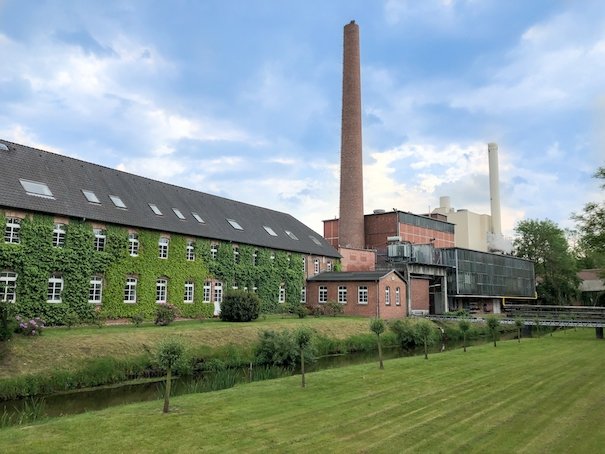
 When Dennis Maps became the print provider for Ordnance Survey (OS), we began using paper produced by Drewsen Special Papers in Germany.
Drewsen began producing paper in the early 16th century, and specialise in the manufacture of a range of uncoated, wood-free speciality papers, all of which are sold worldwide.
We use various sizes of Drewsen’s Progeo 90gsm LC1 paper, a paper with long fibres that is ideal for the production of folded maps. Its quality ensures that Dennis Maps meets the very high standards set by its clients.
We asked Iain Middleton, UK Managing Director of Drewsen Special Papers, to tell us a little about the company and his role:
Drewsen was founded in 1538. How do you account for the company’s continued success over such an extraordinary period of time?
482 years certainly is an extraordinarily long time. We are a family-owned business which has been well-managed, and one which has been a part of the Schürfeld group of companies for over 60 years.
DREWSEN’s strength is its product diversity which includes security, technical, fine and packaging grade papers. Constant product development and a good understanding of the changing markets has enabled us to adapt quickly to customer needs and provide effective bespoke solutions.
How did you become involved with a business based in Germany, and how does the geographical location affect your working life?
 After my training at a paper mill I joined a London-based publishing paper merchant who, several years later, was acquired by a German paper mill. Fast forward 13 years and I joined DREWSEN who I have been with for almost 29 years.
The UK sales office, which is now based in Berkhamsted, Hertfordshire, is on the main railway line out of London Euston and also close to home. It is also within easy access of the M25, M1 and M40, and 30 minutes from London Heathrow airport.
This provides us with good transport links to our customers and allows us to take advantage of regular flights from Heathrow to Hanover or Hamburg which are close to the mill in Lachendorf.
Drewsen export specialist papers all over the world - please can you give us some examples of how they are used.
With such a diverse range of papers there are numerous end uses but to give you some idea these include:
- Security papers: used for certificates, vouchers, passports, visas, tax and revenue stamps, cheques.
- Fine papers: for maps, charts, books, diaries, pharma leaflets, prescriptions, transaction documents, tickets and tags.
- Technical: used as base papers for thermal labels and tickets, adhesive labels, specialised base papers.
- Packaging: for food wrapping and packaging, paper straws, cotton bud sticks.
Drewsen supply Dennis Maps with Progeo paper - what properties does it possess that make it ideal for map and chart printing, and for military usage?

Progeo is a smooth, stable paper with excellent formation and opacity. Additionally the paper has good double folding strength which is vital for OS maps.
Your company is working on sustainable and environmentally friendly papers that can replace plastic products - what developments are we likely to see soon as consumers?
Providing paper solutions to replace single use plastic has been a mission of the mill for a number of years.
Already you will have seen the introduction of paper straws and the use of paper sticks instead of plastic sticks for cotton buds. Our heat seal papers will replace plastic which is currently used in a wide range of consumer goods from food to toys.